
Why You Need Both to Build a Life That Actually Works
Motivation and discipline are often placed on opposite sides—as if one must replace the other. In reality, a meaningful, sustainable life requires both. The problem is not motivation itself. The problem is over-designing life around motivation and under-designing it around discipline.
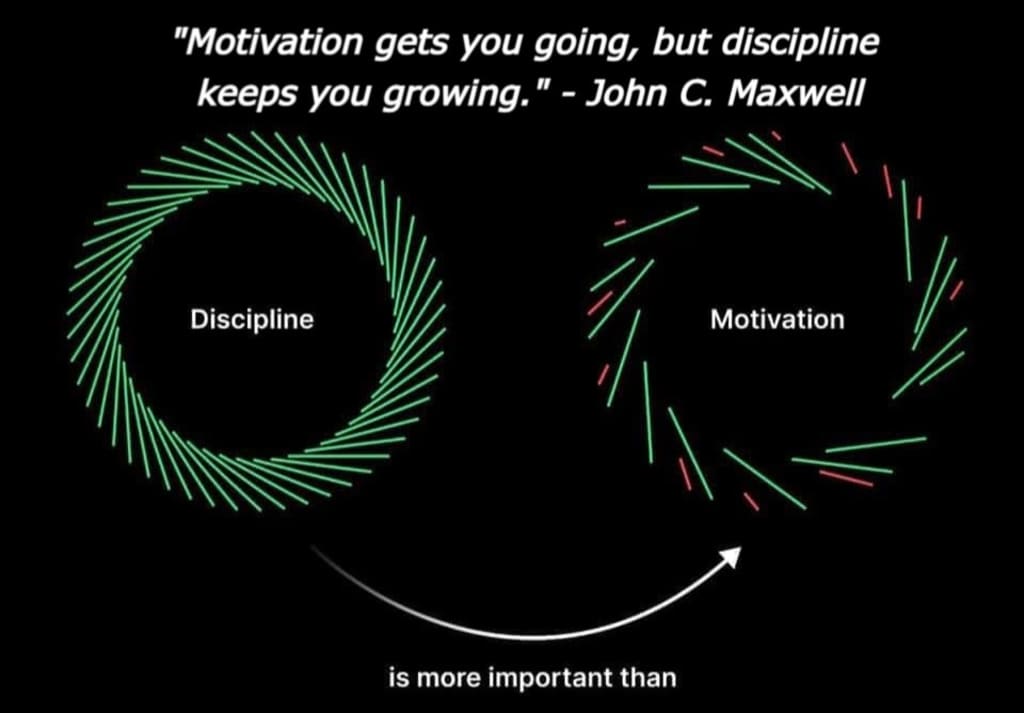
Motivation is powerful. Discipline is stabilizing. One initiates movement; the other sustains it.
When they work together, progress becomes not only possible but also repeatable.
Motivation: The Energy That Starts Change
Motivation is emotional energy with direction. It is what helps us dream, imagine, and begin. It is sparked by purpose, curiosity, pain, or possibility. Without motivation, most journeys never start.
Motivation:
- Helps us begin difficult things
- Brings clarity during moments of inspiration
- Reconnects us with meaning and purpose
- Creates the emotional push needed for change
Dismissing motivation entirely would be a mistake. Motivation is not weak—it is simply temporary by nature. And that is not a flaw; it is its design.
Motivation is a visitor because it is meant to ignite, not to manage daily life.
Discipline: The Structure That Keeps Things Moving
Discipline provides continuity. It turns intention into behavior and ideas into execution. Discipline operates when emotions fluctuate and when motivation is silent.
Discipline:
- Creates reliability in action
- Protects progress during difficult phases
- Reduces dependence on mood and energy
- Turns effort into habit
Discipline does not eliminate freedom; it creates it. When basic actions become automatic, mental energy is freed for creativity, problem-solving, and growth.
If motivation is the spark, discipline is the engine.
Why Most Systems Fail: Designing Only for Motivation
The most common failure pattern is not lack of effort—it is poor design.
People plan goals, routines, and careers, assuming they will:
- Always feel motivated
- Always have energy
- Always see quick results
But real life includes stress, fatigue, boredom, uncertainty, and emotional lows. When systems depend on motivation alone, they collapse during these inevitable moments.
This does not mean motivation is bad. It means motivation alone is incomplete.
Build for Reality, Not for Ideal Days
The real shift is not to remove motivation—but to stop depending on it exclusively.
Build a life that functions on your worst days, not just your best ones.
This means:
- Using motivation to start and realign
- Using discipline to continue and complete
- Designing habits that survive low energy
- Creating systems that work even when emotions fluctuate
Success is not about peak performance. It is about minimum standards being met consistently.
Motivation Reconnects You to “Why,” Discipline Protects the “How”
Motivation is deeply connected to meaning. It reminds you why you chose this path. It refreshes purpose and prevents life from becoming mechanical.
Discipline, on the other hand, ensures that purpose is not wasted. It converts meaning into action, day after day.
When discipline lacks motivation, life feels rigid and draining.
When motivation lacks discipline, life feels exciting but unstable.
Balance is not optional—it is essential.
Environment Design: Where Motivation and Discipline Meet
The smartest individuals do not rely on emotional strength alone. They design environments where:
- Motivation is invited regularly
- Discipline is supported structurally
This includes:
- Clear routines that reduce decision fatigue
- Environments that remove friction
- Boundaries that protect focus and energy
- Systems that continue working when excitement fades
In such environments, motivation becomes a bonus—not a requirement.
Discipline Sustains; Motivation Renews
Discipline carries you forward. Motivation pulls you back to meaning when fatigue sets in.
Discipline ensures you don’t stop.
Motivation ensures you don’t forget why you started.
Long-term success depends not on choosing one over the other, but on knowing when to lean on each.
Final Reflection
Motivation will visit you. Welcome it. Use it to begin, to reflect, and to realign.
But do not ask it to manage your life.
Let discipline live with you. Let it create structure, rhythm, and reliability.
When motivation and discipline work together, progress becomes sustainable—and success becomes inevitable, not accidental.